Speak with our aesthetics team · Same-day appointments available
Does Laser Tattoo Removal Leave Scars? A Physician Explains
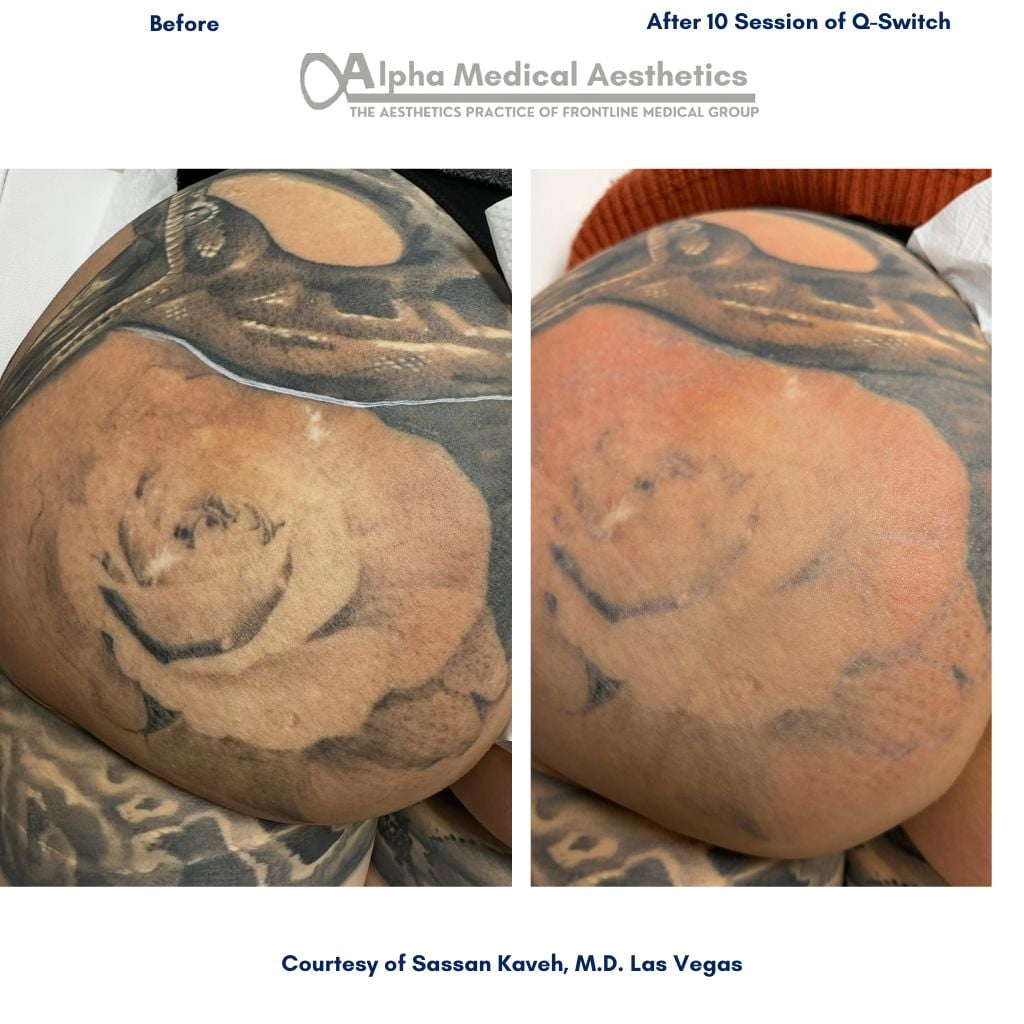
If you’re considering tattoo removal, one of the most common concerns around laser tattoo removal and scarring comes down to a simple question: “Will this leave a scar?”
The short answer is: when performed correctly with modern technology, laser tattoo removal has an extremely low risk of scarring. In fact, scarring is rare and almost always preventable with the right provider, the right laser, and proper aftercare.
At Alpha Medical Aesthetics, we use advanced Q-switched laser technology by Lumenis and have never had a patient develop scarring from tattoo removal, and there’s a very specific reason why.
Let me explain.
How Laser Tattoo Removal Actually Works
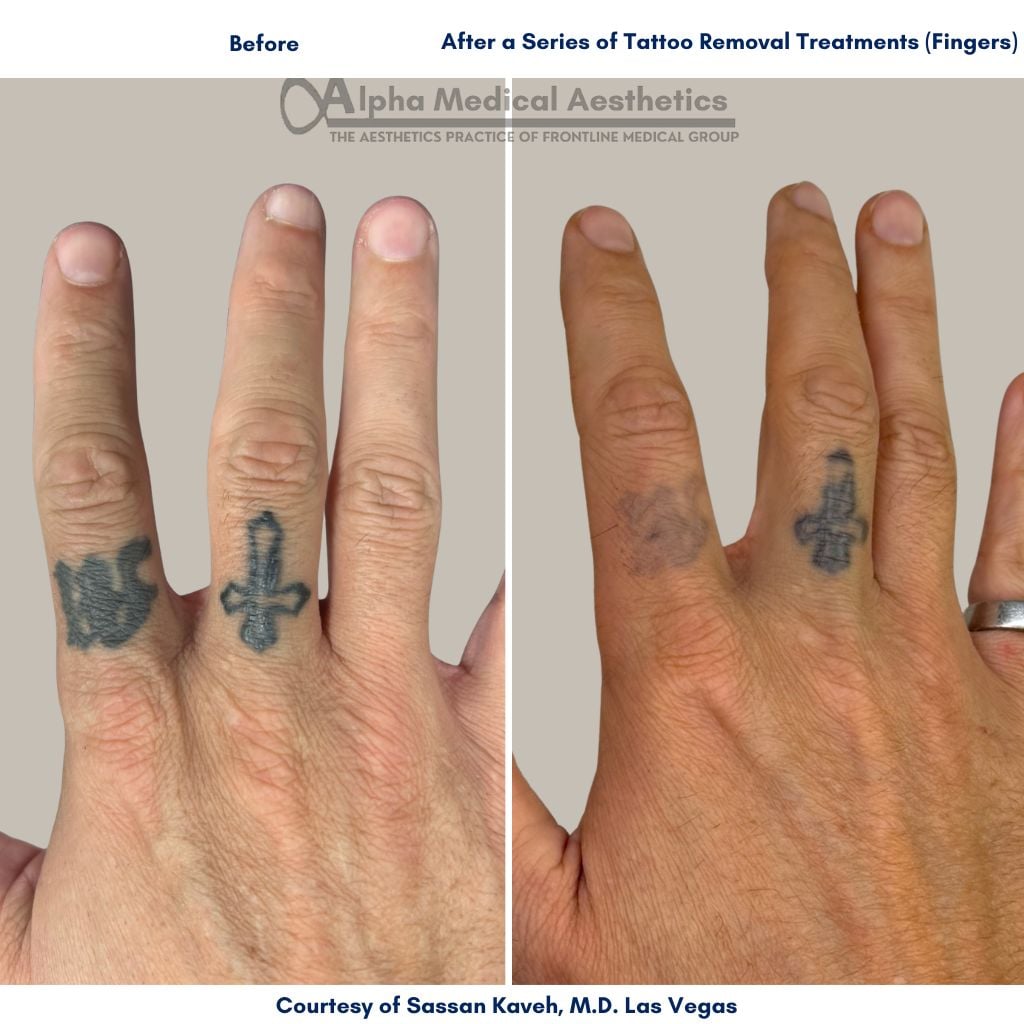
Laser tattoo removal is not about “burning off” the tattoo, but rather precisely targeting ink while protecting your skin.
We use the Lumenis Stellar M22 Q-Switch Laser, which delivers ultra-fast pulses of energy measured in nanoseconds. These pulses break tattoo ink into microscopic particles that your body naturally clears away over time.
Because the laser is designed to target ink pigment, not skin tissue, it significantly reduces damage to surrounding structures.
Even more importantly:
- The energy is delivered so quickly that it doesn’t have time to spread heat into the surrounding skin
- This minimizes inflammation, trauma, and long-term damage
That’s why Q-switched lasers are considered the gold standard for tattoo removal.
So… Why Do Some People Get Scars After Tattoo Removal?
Let’s be honest, when it comes to laser tattoo removal and scarring, concerns are valid. Scarring can happen, but it’s usually related to how the skin is cared for after the procedure rather than the laser itself. When performed by a trained professional, the laser settings are carefully adjusted to your skin type and condition to minimize any risk.
Here are the real causes:
Incorrect Settings
When it comes to laser tattoo removal and scarring, one of the primary risks comes from improper laser settings. If the laser is too aggressive or used incorrectly, it can create excessive thermal damage or burns, increasing the risk of scarring. This is more commonly seen with inexperienced providers.
At Alpha Medical Aesthetics, our providers are trained by the laser manufacturer, industry experts, and participate in ongoing continuing education to ensure safe and effective treatments. Tattoo removal is highly technical, and every treatment requires:
- Customized energy settings
- Proper spacing between sessions
- Adjustments based on skin type and ink depth
Improper Aftercare
This is one of the most overlooked causes of issues related to laser tattoo removal and scarring.
If patients:
- Pick at scabs or blisters
- Expose the treated area to sun
- Do not keep the skin clean and properly hydrated
They significantly increase their risk of infection or delayed healing, which can lead to scarring. We will give you post procedure instructions and review with you after each treatment to make sure you get all of your questions answered.
Pre-Existing Skin Damage
In some cases, concerns about laser tattoo removal and scarring are related to skin changes that existed before treatment. What patients believe is a “removal scar” may actually be:
- A scar from the original tattoo
- Poor healing from the initial tattoo process
Laser tattoo removal does not create new scars, but it may make pre-existing skin changes more noticeable during the healing phase.
Individual Healing Factors
Some patients are naturally more prone to concerns related to laser tattoo removal and scarring, including:
- Keloids
- Hypertrophic scars
- Pigment changes
That said, even in these cases, proper technique, appropriate laser selection, and careful aftercare significantly reduce overall risk.
Why Laser Tattoo Removal and Scarring Is Exceptionally Rare at Alpha Medical Aesthetics
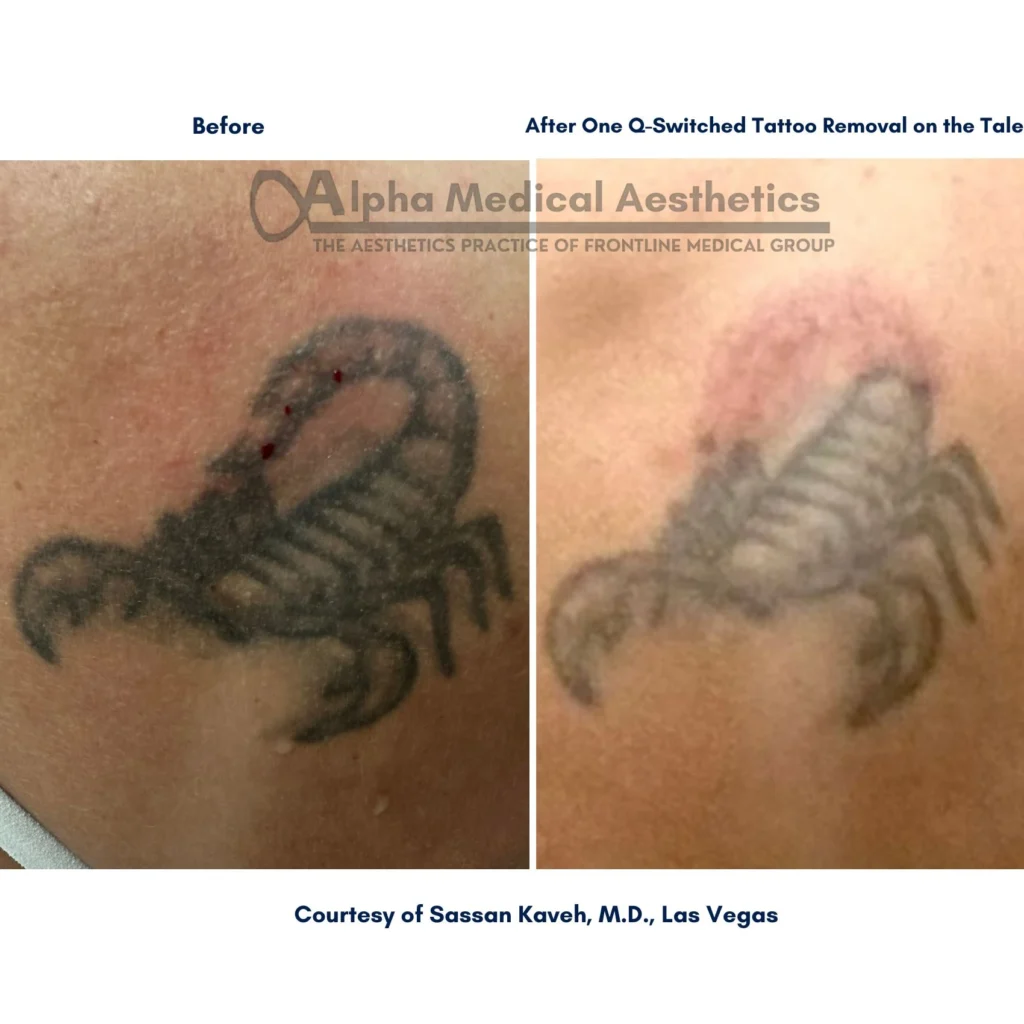
This is where things change.
At Alpha Medical Aesthetics, we’ve built our entire approach around skin preservation and not just ink removal.
1. The Right Technology Matters
We use the Lumenis Q-Switch Laser, which is specifically designed to:
- Deliver ultra-short pulses
- Minimize heat diffusion
- Protect surrounding tissue
Shorter pulse durations mean less potential damage and a lower risk of scarring.
2. Precision Over Aggression
A common mistake in tattoo removal is trying to remove ink too quickly.
We take a controlled, layered approach, allowing your body to safely clear pigment between sessions. Each session is spaced 6-8 weeks apart
This reduces:
- Inflammation
- Skin trauma
- Long-term complications
3. Highly Trained Laser Specialists
Technology alone is not enough.
Our team is extensively trained in:
- Laser physics
- Skin biology
- Advanced treatment planning
We customize every session based on:
- Skin type
- Tattoo depth and color
- Healing response
This level of precision is what protects your skin.
4. Strict Aftercare Protocols
We guide every patient through a detailed healing process to ensure:
- Optimal recovery
- Minimal inflammation
- Zero risk of infection
Because even the best laser cannot compensate for poor aftercare.
What You Should Expect After Laser Tattoo Removal Instead of Scarring
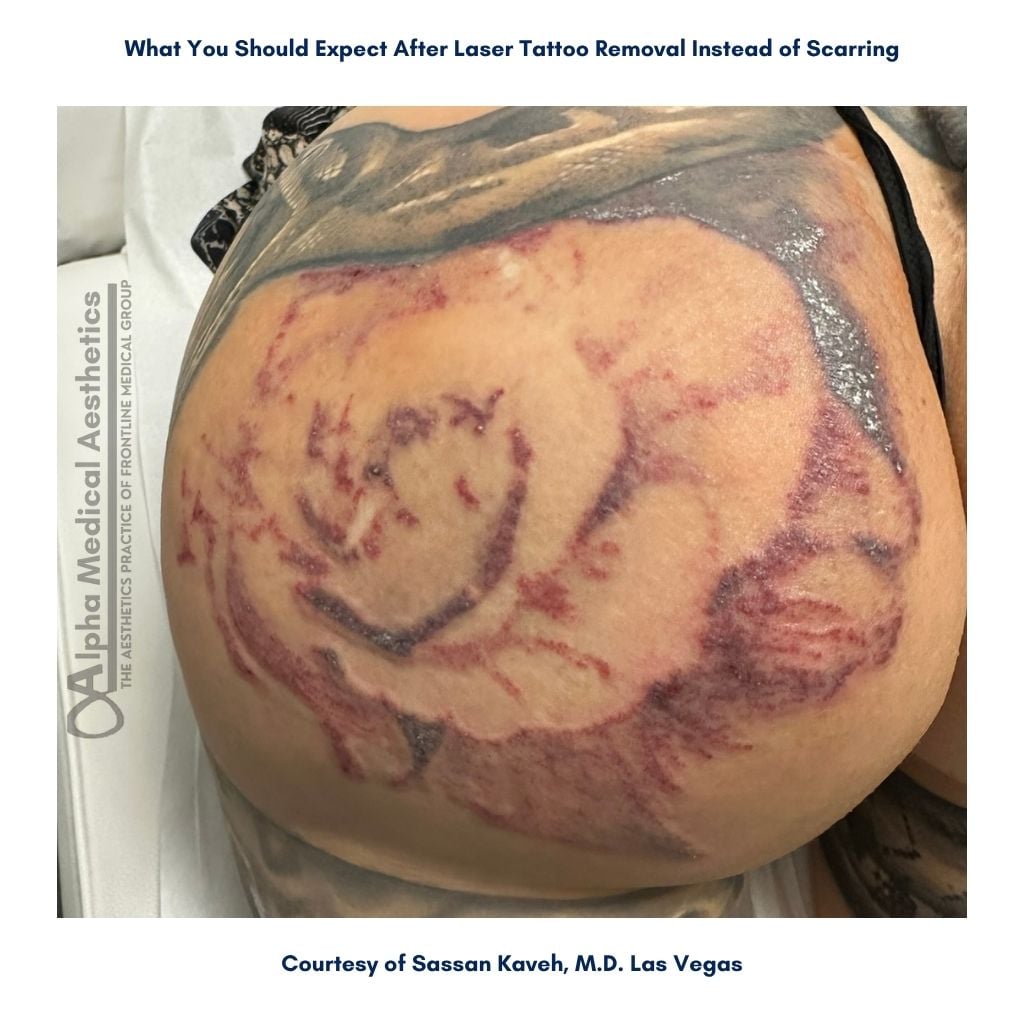
When tattoo removal is done correctly, what you’ll typically experience is:
- Temporary redness or swelling
- Mild blistering or scabbing
- Gradual fading over multiple sessions
These are normal healing responses, not damage.
In fact, studies show that scarring from Q-switched laser tattoo removal is very rare when performed properly.
The Biggest Mistake Patients Make
Choosing a provider based on price.
Tattoo removal is not something you want done cheaply, it’s something you want done correctly.
Because the cost of fixing a scar is far greater than doing it right the first time.
Is Laser Tattoo Removal Safe?
Yes, when performed with the right technology and expertise, laser tattoo removal is:
- Safe
- Effective
- Non-invasive
- Low-risk
Modern advancements have made it possible to remove tattoos without damaging the surrounding skin, which is why it has replaced older, highly scarring methods like excision and dermabrasion.
Frequently Asked Questions about Laser Tattoo Removal and Scarring
Q: Does laser tattoo removal always leave a scar?
A: No. When done correctly with modern lasers, scarring is rare and usually preventable.
Q: Why do some clinics cause scarring when removing tattoos?
A: Improper laser settings, aggressive treatments, and poor technique are the most common causes.
Q: Can the Q-switch laser cause burns?
A: The Q-switch laser can cause burn only if it’s used incorrectly. In trained hands, it is designed to minimize heat damage and protect the skin.
Q: What increases my risk of tattoo removal and scarring?
A: Poor aftercare, picking at scabs, sun exposure, and a history of keloid scarring increases the chances of tattoo removal and scarring
.
Q: How can I avoid scarring after tattoo removal?
A: Choose an experienced provider, follow aftercare instructions, and allow proper healing time between sessions.
Final Verdict on Laser Tattoo Removal and Scarring
If you’re treated with outdated technology or by an inexperienced provider, there is a risk.
But if you choose a clinic that uses advanced systems like the Lumenis Q-Switch Laser and prioritizes skin health:
Scarring should not be part of your tattoo removal outcome.
At Alpha Medical Aesthetics, our focus is simple:
Remove the ink. Protect the skin. Deliver clean, scar-free results.
If you are ready to explore laser tattoo removal and want a safe, physician-guided treatment plan using the most advanced technology available, we invite you to Schedule your appointment online or call us at 702-683-2156 at Alpha Medical Aesthetics today.
To continue learning about advanced aesthetic treatments, take a look at some of our latest articles. See how modern technologies compare in Laser Skin Tightening Las Vegas: Cost, Results, and Best Devices for 2026, get a clear understanding of healing timelines in CO2 Laser Downtime, or learn how we treat redness and facial vessels in Vascular Lesions Removal on the Face.
These resources are created to give you a deeper understanding of non-surgical treatments and help you choose the right approach for your skin with confidence.