Speak with our aesthetics team · Same-day appointments available
What to Expect From a Deep, Transformative Co2 Resurfacing Treatment
By Sassan Kaveh, M.D. | Alpha Medical Aesthetics, Las Vegas
What Determines CO2 Laser Downtime?
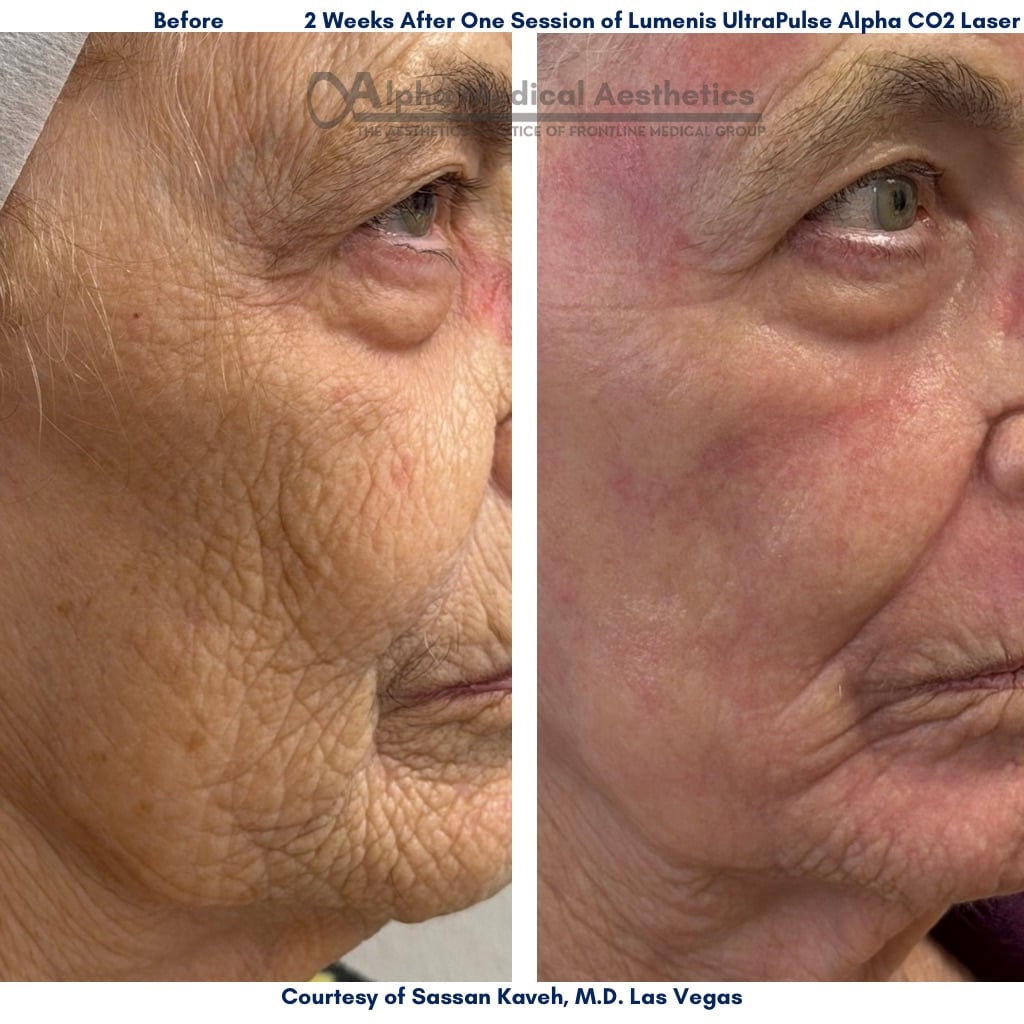
CO2 laser downtime typically ranges from 5 to 14 days after a deep resurfacing treatment, depending on the device used, the depth of penetration, and your individual healing response. Because this is an intensive, collagen-stimulating procedure designed to significantly improve wrinkles, sun damage, acne scars, and skin laxity, temporary redness, swelling, peeling, and sensitivity are expected parts of the recovery process. While CO2 laser downtime requires patience, the tradeoff is powerful, long-term skin transformation that lighter treatments simply cannot achieve.
When patients ask me about CO₂ laser resurfacing, the first question is rarely “Will it work?”
It’s almost always “How much downtime is there?” specifically, how much CO2 laser downtime should they plan for.
And that’s the right question to ask.
Why We Specialize in Deep, Transformative CO₂ Resurfacing
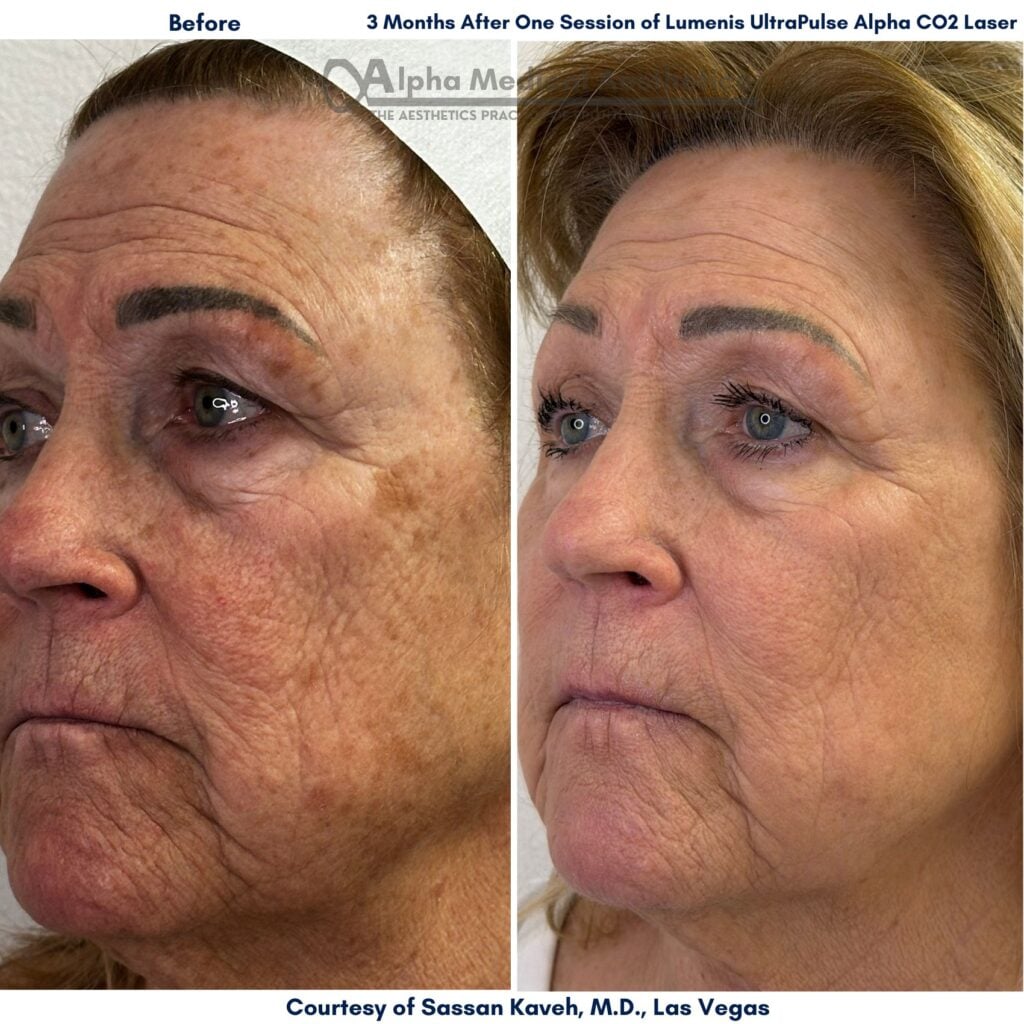
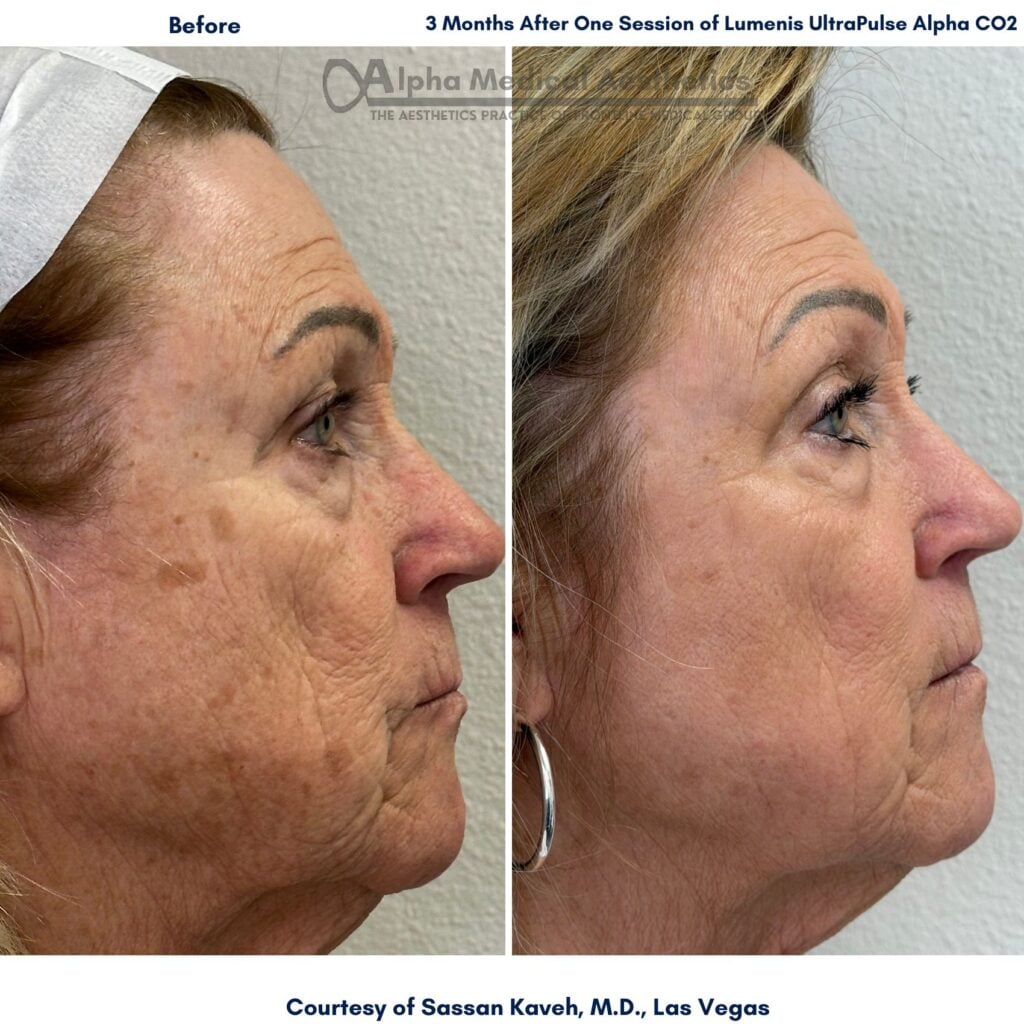
At Alpha Medical Aesthetics, we do not perform superficial CO₂ treatments. We specialize in deep, transformative UltraPulse Alpha CO2 Laser Resurfacing using the Lumenis UltraPulse Alpha, designed to correct advanced aging, deep wrinkles, textural damage, and skin laxity at a structural level. These are the types of treatments that can realistically remove a decade or more of visible aging, but meaningful change requires a meaningful healing process and properly managed CO2 laser downtime.
Downtime is not a side effect of CO₂ laser.
It is part of the investment that produces real structural renewal.
My job is to ensure that CO2 laser downtime is strategic, supported, and optimized, so patients heal efficiently and emerge with skin that is stronger, healthier, and dramatically more resilient than before.
Why CO₂ Laser Downtime Exists and Why It’s Necessary
CO₂ laser resurfacing works by creating controlled micro-injuries in the skin using fractional laser energy. This process triggers a powerful regenerative response, stimulating the production of:
- Collagen
- Elastin
- Hyaluronic acid
These are the structural proteins responsible for firmness, elasticity, hydration, and youthful skin architecture and they naturally decline with age and cumulative oxidative stress from sun exposure, pollution, and inflammation.
When we perform deep CO₂ resurfacing, we are doing much more than just improving the surface of the skin. We are rebuilding the cellular framework of the skin itself. That level of regeneration requires time, energy, and healing, which is why CO2 laser downtime exists.
The goal is not to avoid CO2 laser downtime.
The goal is to get the best result.
Why Preparation Determines Your CO2 Laser Downtime Experience
One of the biggest misconceptions about CO₂ laser is that the procedure alone determines healing time and overall CO2 laser downtime. In reality, what we do before the laser plays an enormous role in:
- How quickly you heal
- How evenly the skin regenerates
- How long your CO2 laser downtime lasts
- How strong and resilient your final result becomes
At Alpha Medical Aesthetics, CO₂ resurfacing is almost never performed in isolation. Every patient undergoes a customized pre-treatment protocol designed to build structural support, improve circulation, and condition the skin for optimal recovery and reduced co2 laser downtime..
Addressing Jowls and Facial Drooping Before CO2
When patients present with drooping in the jowls, brow, or lower face, resurfacing alone is not enough. Skin quality and skin structure must be addressed together to optimize both results and CO2 laser downtime.
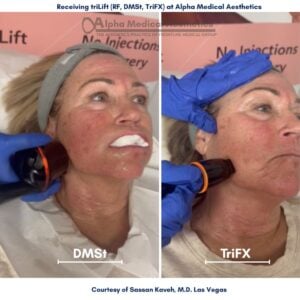
In these cases, I commonly incorporate TriLift by Lumenis prior to CO₂ resurfacing.
TriLift combines three powerful technologies:
- Radiofrequency energy to stimulate collagen, elastin, and hyaluronic acid
- Dynamic Muscle Stimulation (DMSt) to strengthen weakened facial muscles
- Radiofrequency Guided Microneedling to improve laxity in the brow and jowl regions
This approach creates a natural facelift-like effect by restoring muscular support rather than simply tightening the skin over a weak foundation.
By building the frame of the face first, CO₂ resurfacing becomes far more effective and the skin heals with better tension, symmetry, durability and a more efficient CO2 laser downtime period.
Exosomes: A Critical Part of Our CO2 Laser Downtime Strategy
One of the most important and unique aspects of our CO2 protocol for optimizing CO2 laser downtime is the use of exosomes delivered with the Juvesonic device.
Exosomes are powerful cell-signaling molecules that play a key role in tissue repair, inflammation control, and cellular communication. When used properly, they can significantly improve healing quality and recovery efficiency, directly shortening the CO2 laser downtime.
At Alpha Medical Aesthetics, we deliver injectable-grade exosomes using Juvesonic, a completely non-invasive ultrasonic device that uses vibration to drive exosomes into the dermis layer of the skin without needles or invasive disruption to the surface.
We intentionally perform this treatment one day before CO₂ resurfacing, allowing ample time for the exosomes to absorb into the skin cells and begin signaling repair pathways that reduce inflammation and accelerate CO2 laser downtime recovery.
This treatment is included in our full CO₂ package, not offered as an add-on, because it fundamentally changes the healing experience and shortens the co2 laser downtime significantly.
When exosomes are delivered this way, we consistently see:
- Faster recovery times
- Reduced inflammation
- More uniform resurfacing results
- Accelerated shedding of surface debris
- Shortened overall CO2 laser downtime
Even in patients with aggressive treatments, visible crusting and scabbing resolve within 3 to 5 days, which is significantly faster than traditional CO₂ healing timelines and extended CO2 laser downtime of 7 to 14 days.
Precision CO₂ Techniques That Improve Results and Reduce CO2 Laser Downtime
Technology matters, but technique matters even more, especially when optimizing CO2 laser downtime.
During CO₂ resurfacing, I utilize an advanced method where I modify the laser beam into a linear shape, allowing me to precisely slot the energy into the deepest part of a wrinkle.
Rather than simply resurfacing over a line, this approach allows me to:
- Target the base of deep wrinkles
- Stimulate collagen from the deepest point outward
- Encourage the wrinkle to rise and level with surrounding skin
This technique dramatically improves outcomes for etched lines around the mouth, eyes, and forehead and reduces the need for aggressive repeat treatments, which in turn helps control extended CO2 laser downtime.
By working with the anatomy of the wrinkle, rather than against it, we can achieve smoother results with more controlled healing.
Additionally, UltraPulse Alpha CO2 Laser Resurfacing allows for more precise energy delivery, optimized pulse control, and fractional customization compared to older CO₂ platforms. This advanced technology enables deep correction while supporting faster epithelial recovery, which contributes to shorter and more manageable CO2 laser downtime compared to traditional CO₂ lasers.
Watch the video I created explaining why UltraPulse Alpha CO2 Laser is considered the Holy Grail of all CO₂ lasers so you can understand this technology more clearly.
What Patients Should Understand About CO2 Laser Downtime
CO₂ laser downtime is not just about redness or peeling. It represents a phase where the skin is:
- Actively rebuilding collagen
- Restoring barrier function
- Increasing hydration capacity
- Becoming structurally stronger
Patients should expect a period of visible recovery, social downtime, and intentional aftercare during their CO2 laser downtime. This is not a lunchtime procedure, nor is it designed to be.
What patients gain in return is skin that behaves younger, not just looks younger.
After CO2 resurfacing, the skin is measurably more resilient because of its increased collagen, elastin, and hyaluronic acid content. This means improved texture, improved tone, better elasticity, and greater resistance to future environmental damage.
Why Deep CO2 Produces Long-Term Skin Resilience
One of the most overlooked benefits of CO2 resurfacing is what happens after healing is complete and CO2 laser downtime has passed..
Because the skin has been stimulated to produce high levels of structural proteins, patients often notice:
- Better response to skincare
- Improved tolerance to treatments
- Longer-lasting results from injectables and energy devices
- Reduced progression of future aging
In other words, CO₂ doesn’t just reset the clock, it slows it down. By rebuilding the foundation of the skin, we create an environment that ages more gracefully moving forward.
A Thoughtful Approach to CO2 Laser Downtime Delivers Superior Results
At Alpha Medical Aesthetics, CO2 laser downtime is not something we dismiss. It is something we design intelligently.
Through advanced preparation with TriLift, exosome therapy, UltraPulse Alpha CO2 Laser Resurfacing, and precision CO₂ technique, we ensure that every patient enters their healing phase supported, optimized, and positioned for dramatic, lasting improvement with reduced and controlled downtime. We use various gels, creams, and state of the art colloidal silver products to ensure a safe and optimized recovery process.
In the next blog, we’ll walk through the healing process step by step, so patients know exactly what to expect during their CO2 laser downtime as their skin regenerates.
For now, understand this:
Downtime is temporary. Structural change is not.
If you’re ready for real skin transformation, and not just superficial improvement, CO₂ laser resurfacing remains one of the most powerful tools we have in aesthetic medicine.
Frequently Asked Questions on CO2 Laser Downtime
Q: How long is the downtime after CO laser resurfacing?
A: CO2 laser downtime typically ranges from 5 to 14 days, depending on the depth of treatment, the technology used, and your individual healing response. At Alpha Medical Aesthetics, I specialize in deep, transformative resurfacing using the Lumenis UltraPulse Alpha, which allows for more precise energy delivery and optimized pulse control compared to traditional CO₂ lasers. Most patients should plan for about 5 days of social downtime, although visible crusting often resolves more quickly in our patients because we include exosome therapy with Juvesonic prior to treatment. The deeper the correction, the more meaningful the healing phase. That depth is also what allows us to remove years of visible aging in a single treatment, making the temporary CO2 laser downtime a worthwhile investment in long-term structural skin renewal.
Q: Can I speed up my healing after CO2 laser?
A: Yes, healing and overall CO2 laser downtime can be optimized with proper preparation and post-treatment care. At Alpha Medical Aesthetics, we include advanced pre-treatment protocols such as injectable-grade exosomes delivered with Juvesonic the day before UltraPulse Alpha CO2 Laser resurfacing. This supports cellular repair, reduces inflammation, and improves recovery efficiency. Following your customized aftercare instructions carefully, avoiding sun exposure, maintaining skin hydration, and allowing the skin to heal without disruption are also critical. While you cannot eliminate CO2 laser downtime entirely, you can significantly improve the quality, speed, and comfort of the healing process with the right medical strategy.
Q: Why does your CO2 laser have more downtime than lighter treatments?
A: It doesn’t! Our UltraPulse Alpha CO2 Laser is much quicker healing than typical CO2 treatments that can last up to 3 weeks. We create deep structural and cellular change. I use the UltraPulse Alpha CO2 Laser to stimulate substantial collagen, elastin, and hyaluronic acid production. When we are correcting deep wrinkles, advanced sun damage, or significant textural aging, a meaningful regenerative response requires a healing phase. The downtime reflects the level of transformation.
Q: Is CO2 laser downtime painful?
A: Most patients describe the co2 laser downtime as uncomfortable rather than painful. During treatment, we ensure you are properly numbed and supported. Afterward, the sensation is often compared to a strong sunburn for the first few days. Because we prepare the skin with TriLift, radiofrequency-guided microneedling when appropriate, and exosome therapy, inflammation is typically more controlled than traditional CO₂ protocols. We also provide detailed aftercare guidance to keep you comfortable throughout the recovery phase.
Q: Is the CO₂ laser downtime worth it?
A: In my professional opinion, absolutely. UltraPulse Alpha CO2 Laser Resurfacing remains the gold standard for dramatic skin rejuvenation. When performed correctly and with proper preparation, it can remove a decade or more of visible aging and leave the skin stronger, more resilient, and biologically younger. Patients often tell me the temporary co2 laser downtime was one of the best investments they’ve made in their appearance because the results last for years, not months.